RU
RU  ES
ES  FR
FR  EN
EN  IT
IT 
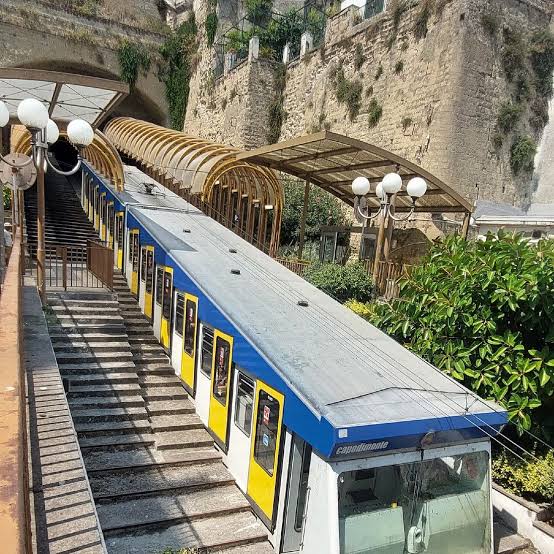
Travel Tips – Naples' Funiculars
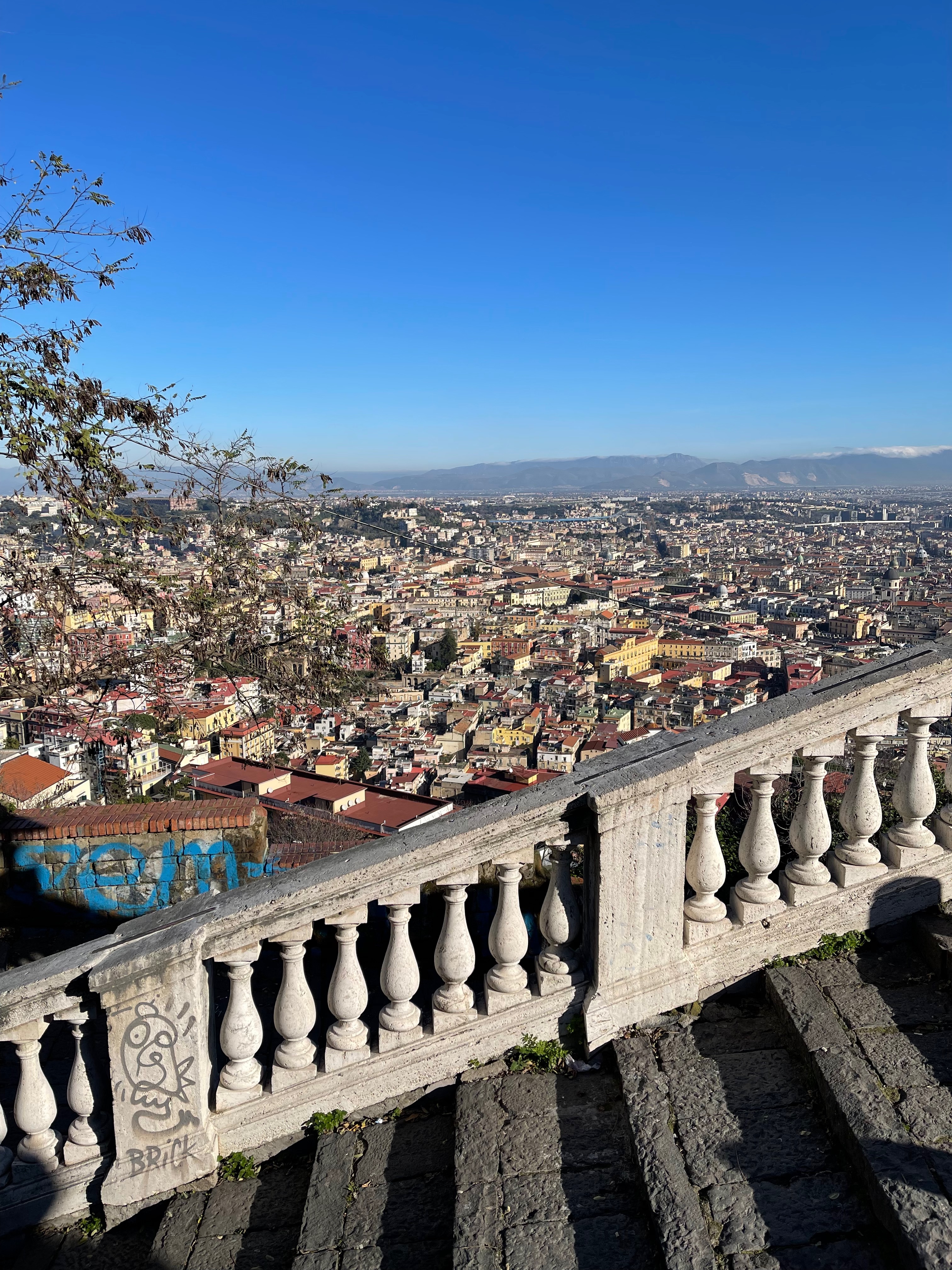
From our experience, we’ve learned that many tourists don't realize that Naples is a vertical city. There’s more to the flat area than the waterfront and surrounding neighborhoods. Many, looking up, notice a castle dominating the city. That’s Castel Sant’Elmo, and the best way to reach it from Hotel Il Convento is to take one of the city’s funiculars.
They’re a popular means of transportation for Neapolitans, allowing you to avoid many climbs and, in the hottest months, they’re a real plus.
In Brief
Naples has four funiculars connecting the city center and the Chiaia neighborhood with the hilly areas of Vomero and Posillipo. The Pignasecca Market also has its own funicular, which takes you just steps from Castel Sant’Elmo. Tickets are public transport tickets and cost €1.30 per person per trip. They can be purchased from vending machines located at all stations, but some businesses, such as bars and tobacconists, also sell them.
What are Naples’ funiculars?
Funiculars are railway systems where carriages are pulled along inclined tracks.
They have existed in the city for over a century and are an integral part of city life. Every day, thousands of people use these vehicles.
Many tourists are surprised by this means of transport, which they know little about, and which often becomes the preferred way to get a different view of the city. Social media rarely celebrates funiculars, which is why they are so popular.
The four funiculars of Naples
The Central Funicular
It is probably the most used by tourists.
It connects Piazza Augusteo, a few steps from Via Toledo and the Galleria Umberto I, with Piazza Fuga in the heart of Vomero.
For those staying at the Hotel Il Convento, it is the most convenient solution for reaching the hilly area and enjoying one of the most famous views in the world.
The journey takes a few minutes, and rides can be “Direct” or “Mixed.”
Direct means they don't make intermediate stops (Corso Vittorio Emanuele, Petraio). Mixed rides, on the other hand, take a little longer because they also stop at intermediate stops. In any case, the type of ride you're about to depart from is indicated at the start, which stops and how many, making it easy for even the less experienced to use funiculars.
Chiaia Funicular
Connects the Chiaia neighborhood with Vomero. It is the oldest of Neapolitan funiculars, inaugurated in the 19th century.
Useful for those wishing to visit Via dei Mille, the waterfront, and then ascend to Via Scarlatti and Piazza Vanvitelli.
Montesanto Funicular
Starts from the Montesanto area of the historic center and reaches Via Morghen in Vomero.
This is the one that best allows you to perceive the difference between the working-class Naples of the center and the residential Naples of the hills. As mentioned above, this is the best way to reach the Belvedere di San Martino.
Mergellina Funicular
It connects the seafront and the Mergellina area with Via Manzoni and Posillipo Hill.
It's rarely used by tourists, but it's an excellent way to reach some of the city's most picturesque panoramic points.
How much does the ticket cost?
Currently, the ANM urban ticket for a single ride on the funicular’s costs €1.50. Alternatively, you can use the 90-minute integrated ticket that allows you to combine funiculars, buses, and other public transportation.
Tickets can be purchased from authorized retailers, automatic ticket machines, via dedicated apps, or with contactless systems at authorized stations.
Before traveling, it's advisable to check for any fare updates. In any case, we recommend visiting the website of the Neapolitan transport company, ANM.
Why use the funiculars when visiting Naples?
The immediate and easy answer is “to save effort.”
But there's more.
Funiculars allow for much more interesting and diverse itineraries than those offered by many.
You can start from the Spanish Quarter, reach Vomero in just a few minutes, visit Castel Sant’Elmo, stroll along Via Scarlatti, and then return to the historic center without tackling long climbs.
An itinerary that on foot would require much more time and energy.
A curiosity that few know
When they were built, the funiculars contributed significantly to the development of Vomero.
Until the end of the 19th century, the hill was a peripheral area. With the arrival of mechanized transport, the neighborhood began to grow rapidly, becoming one of the most important residential areas in the city.
In a certain sense, the funiculars didn’t simply connect two points in Naples. They transformed it.
Practical Tips
Even if you're staying for just a few days, use the Central Funicular at least once.
Plan your ascent for late afternoon and stay in Vomero until sunset.
The view from Castel Sant’Elmo is considered by all tourists to be the highlight of their stay in Naples.
And it's not hard to understand why.